
THE BODY SPEAKS: THE POWER OF DRAMATIC CREATIVITY
There is a unique kind of creativity that doesn’t live on canvas or paper like fine art. It’s found in breath, movement, and the rise and fall of a voice. It’s creativity that lives in the human body and is expressed on stage.
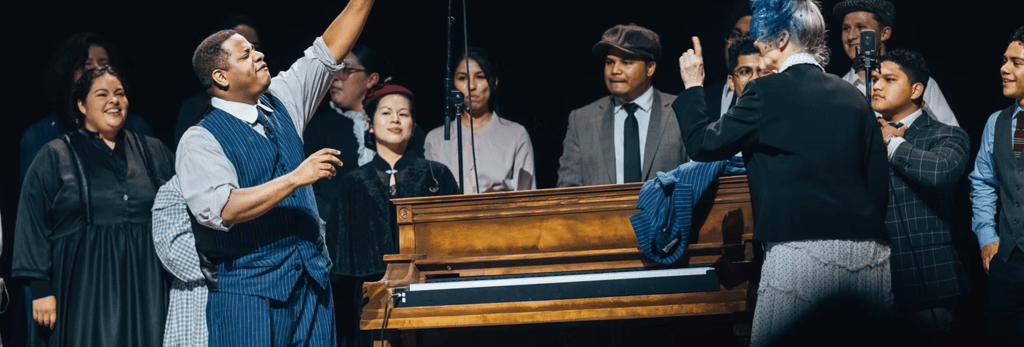
There is a unique kind of creativity that doesn’t live on canvas or paper like fine art. It’s found in breath, movement, and the rise and fall of a voice. It’s creativity that lives in the human body and is expressed on stage.
Within the community of artists I’m part of, creativity is often released through dramatic expression — monologues, plays, skits, mime, and actions set to music. These art forms are different from many others because the artist themselves becomes the canvas. Their voice becomes the paint. Their body movements become the brush. Emotion and anointing becomes the color and light.
When it works — when it truly comes alive — something remarkable happens. The audience stops watching and starts experiencing.
The Moment the Room Changes
If you’ve ever watched a powerful dramatic presentation, you know the moment I’m talking about. The atmosphere shifts. The performer steps into the scene, the lights fade, and suddenly the air feels different. The audience leans forward. Background noise and conversations hush as time seems to pause and draw us into another world… another moment. It’s no longer just a performance but a shared experience.
A well-delivered monologue can make a room full of strangers feel the same emotion at the exact same moment, or even a different emotion all at the same time. A silent mime can communicate a story that words might struggle to capture alone. Movements set to music can express something deeper than language ever could. The Spirit’s anointing of the Christian artist is passed to the crowd creating an opportunity for the creation to experience the Creator.
The Artist Disappears
The most honest and powerful performers understand that the goal is not to be seen. The goal is to reveal something larger than themselves… a message that must be heard… and felt. When a dramatic presentation truly works, the audience stops seeing the performer as a person standing on a stage. Instead, they see the character and the story. They feel emotion rather than only hear words. The actor disappears as the story takes their place. In that moment, art stops being entertainment and becomes connection.
Creativity Through the Human Body
One of the most fascinating things about dramatic creativity is that it uses the tools we carry with us every day. A voice, face, hands, posture, and movement. And for the Christian artist… the Spirit of God. With nothing more than these things, a performer can communicate joy, heartbreak, fear, redemption, humor, or love.
A pause can hold an entire room in silence. A raised eyebrow can trigger laughter or suspense. A whispered line can make us lean in with intrigue. This reminds us that creativity is not limited to objects we produce. Sometimes creativity is simply the courage to express something real through the body we’ve been given by our Creator.
The Audience Becomes Part of the Story
Perhaps the most beautiful part of dramatic art is how it pulls the audience inside the story. Unlike reading a book or simply looking at a painting, dramatic performance unfolds in real time. The audience experiences the story at the same moment the performer expresses it. There is no rewind but just the now moment.
And because of that, something sacred happens. The audience becomes invested and begins to imagine themselves inside the story. For a few minutes, they are not observers but participants.
Why This Kind of Creativity Matters
In a world that often feels distracted and disconnected, dramatic art has a unique ability to make people feel something deeply. It makes us pause. It invites us to empathize and awaken our imagination. It reminds us that stories are not just things we hear — they are things we live.
And sometimes, through the courage of someone standing on a stage, an audience discovers a piece of their own story reflected back to them. They feel seen and heard without standing on a stage themselves. They feel known. And sometimes, being known is the healing we need.
The Invitation to Create
Not every artist will paint or write. Some artists are called to create through movement, voice, and presence.
If you feel drawn to dramatic expression — whether through acting, mime, spoken word, or movement — that impulse is worth exploring. Somewhere out there is an audience waiting to experience the story you might bring to life. And when you step into that moment…your voice might become the doorway through which someone else finally feels the story.
If this is you, consider registering for the 2026 UPCI Arts Conference in Belleuve, NE. This is three days of live and engaging sessions for those interested in Christian drama and fine art.
- Casey